16x30x4 Air Filters Replacement Schedule
Replace a 16x30x4 air filter every 90 days. That number came from one-inch panels, not from the four-inch media filters that sit in a cabinet like this one and hold several times the dust before airflow suffers. What actually sets your interval is how much of your air crosses the filter face, and sealing your ducts moves that number in the direction almost nobody accounts for.
Below are the four conditions that shorten a 16x30x4 cycle, what a loaded pleat looks like at 30 days versus 90, and why the first filter after a sealing job rarely lasts as long as the one before it.
TL;DR
A 16x30x4 air filter runs about 90 days in a typical home. Check it once a month and swap it early if the pleats have gone evenly gray across the full face. Pets, heavy system runtime, and recently sealed ductwork all pull that interval down toward 60 days.
Key Takeaways
A 16x30x4 filter carries a nominal label of 16 by 30 by 4 inches and an actual measured size of 15.5 by 29.5 by 3.75 inches.
ENERGY STAR recommends checking an HVAC filter once a month and replacing it at a minimum every three months.
The EPA notes that four-inch HVAC filters need changing less often than one-inch filters.
Sealing a leaky return duct routes more household air across the filter face, which loads the filter faster than it loaded before the sealing work.
Filterbuy manufactures the 16x30x4 size in MERV 8, MERV 11, and MERV 13.
How Often Should You Replace A 16x30x4 Air Filter In A Typical Home
Ninety days is the working baseline for a 16x30x4 filter in a single-family home with no pets and normal system runtime. Check the filter at the 30-day mark and again at 60 days rather than trusting the calendar alone. Four household conditions move that number, and three of them can cut it close to half.
ENERGY STAR heating and cooling guidance sets the outer boundary for every HVAC filter regardless of depth. Treat three months as the point at which you replace the filter whether or not it looks loaded, and treat the monthly look as the thing that tells you to go earlier.
Does The Ninety-Day Interval Count Calendar Days Or Runtime Hours
Ninety days is a calendar shorthand for roughly a season of typical blower runtime, and it stops being accurate wherever runtime is not typical. A system in a hot, humid climate that cools most of the year pushes far more air across the filter in 90 days than a system in a mild climate that idles half the year. The filter responds to hours, not to dates.
Two homes can run identical 16x30x4 filters for the same 90 days and pull out filters in completely different conditions. The variable is blower hours. A thermostat set to Auto in a mild climate might run the blower a few hours a day through the shoulder seasons. The same setting in a climate that cools from March through November runs it many times that.
Switching the fan from Auto to On changes the math again. Continuous circulation moves air across the filter around the clock, which improves filtration coverage and shortens filter life at the same time. Anyone who made that switch for air quality reasons should shorten the interval rather than keep the schedule that worked on Auto.
The practical fix is to judge the interval by runtime rather than by dates. In a mixed climate where the system idles through spring and fall, 90 days is a fair approximation. In a climate that cools nearly year-round, those same 90 calendar days push far more air across the filter than the number implies, so hold to 60 days and look at the filter at 30.
Why Does A Four-Inch Filter Last Longer Than A One-Inch Filter
A four-inch filter holds more dust before its pressure drop climbs, because the deeper frame lets the manufacturer fold in several times the pleat surface area a one-inch panel can carry. The EPA makes the same point in its household filtration guidance, noting that two-inch and four-inch filters cost more up front and need changing less often than one-inch filters.
Surface area is the whole mechanism. A one-inch panel presents a shallow pleat that clogs across a small area, so airflow resistance rises quickly once dust bridges the fibers. A four-inch media filter spreads the same volume of dust across far more media, so the system keeps its airflow longer into the cycle.
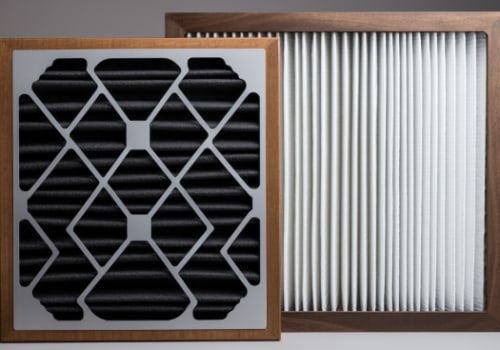
Pleating is the mechanism behind the depth advantage. Folding the media into a zig-zag multiplies the surface area an air filter presents to the airstream without changing the size of the opening it has to fit.
The depth advantage has a limit. A four-inch filter left in for six months in a dusty home is still a restriction, and the deeper frame hides its loading better than a thin panel does. Depth buys time rather than removing the need to look at the filter.
The advantage is also easy to overestimate. A four-inch filter does not last four times as long as a one-inch filter, because dust does not load evenly through the media. The upstream face takes most of it while the downstream layers stay comparatively open, so pressure drop starts climbing well before the filter is uniformly packed. The practical result is that a four-inch filter looks cleaner than it is, and that appearance is the most common reason homeowners leave one in past its useful life.
What Is The Actual Size Of A 16x30x4 Air Filter
A filter labeled 16x30x4 measures 15.5 by 29.5 by 3.75 inches in actual size. Nominal labels round up to the nearest whole inch across nearly every filter size on the market, so the printed number describes the slot the filter fits rather than the filter itself. Measure the cabinet opening before you order a replacement.
Those figures come from Filterbuy, which publishes an actual dimension alongside the nominal label for each size it manufactures. The gap matters because a filter cut to a true 16 by 30 inches would bind in the cabinet and buckle. The 15.5 by 29.5 face slides in with enough clearance to seat flat against the gasket. If your measured opening comes in near 16 by 30, the 16x30x4 nominal size is your filter. If it measures closer to 16 by 25, you are looking at a different size, and the two do not substitute for one another.
Size rarity matters here more than it sounds. A 16x30x4 is not a shelf item at most hardware stores, so the usual fallback of grabbing a replacement on the drive home does not exist for this size. That one logistical fact stretches real-world replacement intervals well past the recommended ones, and it is the argument for keeping the next filter on the shelf rather than ordering once the current one is already loaded.

Which MERV Rating Should You Use In A 16x30x4 Filter
MERV 8, MERV 11, and MERV 13 are the three ratings commonly stocked in the 16x30x4 size. The EPA advises choosing MERV 13 or the highest rating your system fan and filter slot will accommodate, and checking the equipment manufacturer information first, because higher-efficiency media raises airflow resistance and some residential systems lack the fan capacity to handle it.
MERV comes from ANSI/ASHRAE Standard 52.2-2017, which scores a filter on how much of each particle size range it removes rather than on one summary figure.
The EPA Guide to Air Cleaners in the Home notes that medium-efficiency filters in the MERV 7 to 13 band are nearly as effective as true HEPA filters at controlling many of the airborne particles found in a house.
The airflow objection carries less weight in a four-inch cabinet than it does in a one-inch slot. Denser MERV 13 media resists airflow more per square foot, but a four-inch frame holds several times the media area, and that added area offsets much of the added resistance. A homeowner who was warned that MERV 13 would choke a one-inch return grille is not looking at the same tradeoff in this size.
For a closer look at how filter rating and duct condition interact, see MERV 8 filters and duct sealing working together.
Filterbuy is a United States air filter manufacturer that produces pleated MERV-rated filters at its plant in Talladega, Alabama, and sells replacement sizes direct to consumers. It builds the 16x30x4 size in MERV 8, MERV 11, and MERV 13, and it lists a 90-day replacement interval for that size. ENERGY STAR advises checking any HVAC filter monthly and replacing it at a minimum every three months. Filterbuy's specification page for 16x30x4 air filters is also available.
How Can You Tell A 16x30x4 Filter Is Due Before The Calendar Says So
Pull the filter and hold it up to a light. A filter due for replacement shows even gray loading across the whole pleated face and passes noticeably less light than a fresh one. Five other signals point the same direction, and any two of them together mean you replace the filter now rather than at the next scheduled date.
Even gray loading across the full face, with the pleat valleys darker than the peaks.
Pleats bowed or collapsed toward the blower, which means the pressure drop has already climbed.
Longer run times, with rooms taking longer to reach the thermostat setpoint.
Dust settling on supply registers within days of cleaning them.
A whistle or a suction noise at the filter cabinet door while the blower runs.
Loading concentrated in one band rather than spread evenly, which points to a bypass gap around the frame rather than a filter at the end of its life.

Does Sealing Your Ducts Change How Often You Change The Filter
Yes, and the change runs in the direction most homeowners do not expect. Sealing a leaky return means the air handler stops pulling unconditioned attic and crawlspace air in behind the filter, along with whatever sits in the wall cavities it passes through. All of the air the system moves now crosses the filter face, so the filter captures more and loads faster than it did before the sealing work.
A leaky return duct is a bypass. Air entering the system through a seam downstream of the filter cabinet never passes the media at all, which is why homes with leaky returns often show dust on their registers while the filter still looks reasonably clean. The filter looked clean because a share of the air was traveling around it.
Once the seams are closed, that share moves back across the filter. For the first replacement cycle after a sealing job, check the filter at 30 days and plan to replace it at 60 rather than 90. After that first cycle, the household dust load settles into a new normal, and the interval usually returns to somewhere near 90 days.
Sealing also raises static pressure in some systems. If you were already running MERV 13 media in a four-inch cabinet, ask the technician who did the sealing to take a static pressure reading before leaving. That reading tells you whether the filter rating you were running still suits the system.
Anyone who wants to inspect the sealing work itself can follow how to confirm a duct sealing job was done properly before the crew packs up.
Should You Run A Filter In The Cabinet And A Filter In The Return Grille
No. Filters in both places put two restrictions in series on one blower, and the system pays for both. If your air handler has a four-inch media cabinet, that cabinet is the filter location, and any panel filters sitting in return grilles should come out and leave a bare grille behind.
This setup appears more often than it should, usually after a previous owner or a well-meaning technician added a media cabinet without pulling the grille filters. The house then runs a 16x30x4 in the cabinet plus a one-inch panel at every return, and nobody realizes the blower is fighting all of them at once.
The symptom looks like a filter that refuses to stay clean. You replace the cabinet filter, airflow improves for a week or two, then falls off faster than the calendar says it should. Walking the house and checking every return grille takes about five minutes, and it is worth doing once before you conclude the cabinet filter is the problem.
How Do You Replace A 16x30x4 Filter Correctly
Replacement takes under five minutes once the cabinet is open. The two steps homeowners skip most often are noting the airflow arrow before pulling the old filter and checking the cabinet door gasket while the slot sits empty. Both of those steps decide whether the new filter actually does its job.
Switch the system off at the thermostat.
Open the filter cabinet door or slide panel.
Note which way the airflow arrow points on the old filter before you move it.
Slide the old filter straight out and keep it flat.
Bag the old filter at the cabinet rather than carrying it loose through the house.
Look at the door gasket and the cabinet lip for gaps or crushed foam.
Slide the new filter in with the arrow pointing toward the air handler.
Close and latch the door so the gasket compresses evenly.
Write the install date on the cardboard frame with a marker.
Switch the system back on at the thermostat.
Access is the real obstacle in a lot of homes. An air handler mounted in an attic or above a garage ceiling turns a five-minute job into one that needs a ladder and a free afternoon, and that friction drives more overdue filters than forgetfulness does. If your cabinet is hard to reach, buy filters several at a time and attach the change to something already on your calendar rather than planning to remember.
“The filter is the only part of a duct system a homeowner handles every ninety days, and it keeps a record of what the ductwork is doing. A filter that stays clean while the registers gather dust is reporting a problem rather than good health, because air is entering the system somewhere the media never touches.” - Filterbuy Filter Experts
Seven Essential Resources On 16x30x4 Air Filters
Each resource below answers the question a 16x30x4 buyer reaches next, in the order most people reach it.
See Where Filter Changes Fit in Your Full Maintenance Schedule
This homeowner maintenance guide covers air filter replacement alongside condenser cleaning, coil and fin care, condensate drain inspections, and annual professional servicing. It helps homeowners see filter changes as one part of a complete air-conditioning maintenance routine.
Source: InterNACHI Central Air-Conditioning System Inspection Guide
Understand What A MERV Number Actually Measures
A plain-language explanation of how filters are tested under ANSI/ASHRAE Standard 52.2 and what the resulting rating does and does not tell you. This is the page to read before choosing between MERV 8, 11, and 13.
Source: CDC NIOSH ventilation FAQs
Know When A Better Filter Will Not Fix The Problem
States directly that filtration cannot substitute for source control or ventilation, which stops a homeowner from over-buying filtration to solve a moisture or combustion issue. It also gives a health-side view of MERV selection and change frequency.
Source: American Lung Association air cleaning guidance
Compare Four-Inch Depth Against Cost With Peer-Reviewed Evidence
A clinical review that addresses filter depth head-on, noting that custom-installed two-to-five-inch filters carry higher capacity at higher cost and that three months suits normal residential use. This is the tradeoff a 16x30x4 buyer is actually weighing.
Source: AAAAI Indoor Allergen Committee rostrum on filtration
Check Whether Your Filter Cabinet Is Leaking Around The Filter
The one resource here covers the filter media box itself, including the gasketed access panel that keeps air from leaking past the filter. For a four-inch cabinet filter, this decides whether the media ever sees the air it is supposed to clean.
Source: Building America Solution Center filter installation guide
Adjust Your Filter And Settings Before Smoke Season Arrives
Recommends MERV 13 or higher during smoke events along with frequent replacement, recirculate mode, and running the fan on rather than auto. Those settings determine whether the filter gets used at all.
Source: AirNow guidance for smoky conditions
Verify Allergy Claims Against An Independent Standard
An independent certification program that tests household air products against published criteria rather than manufacturer claims. Useful for an allergy household deciding how far up the MERV scale to go.
Source: AAFA Certified Asthma and Allergy Friendly program
Supporting Statistics
Three measured findings sit behind the guidance above.
Eighty-Eight Percent Of U.S. Households Use Air Conditioning
Two-thirds run central AC or a central heat pump as their main equipment.
The figure comes from a 2020 survey of 18,496 households.
Central systems carry the return ductwork and filter cabinets a 16x30x4 sits in.
Filter interval is a mainstream maintenance question, not a niche one.
Source: EIA Residential Energy Consumption Survey on household air conditioning
Duct Location Predicts Home Air Leakage Across 134,000 Measured Houses
Blower door measurements were collected from nearly all 50 states.
The sample covers 134,000 single-family detached homes.
Whether ducts sit inside or outside the conditioned space predicts how leaky a house is.
That finding is the measured basis for treating a sealing job as a change in filter loading.
Source: Lawrence Berkeley National Laboratory residential air leakage analysis
77,850 U.S. Wildfires Burned 5.1 Million Acres In 2025
Fire count ran well above both the five-year and ten-year averages.
Smoke events at that scale override a normal 90-day interval.
Filter rating and replacement frequency both shift during fire season.
Source: National Interagency Fire Center 2025 wildland fire annual report
Final Thoughts And Opinion
The 90-day interval survives because it is easy to schedule, not because it describes how a four-inch media filter behaves in a real house.
A filter is the cheapest diagnostic instrument most homeowners own, and nearly all of them throw it out without reading it first.
What A Pulled Filter Tells You
Even gray loading across the full face means the cabinet is sealing and the system is pulling its air through the media.
Loading concentrated in one band means air is slipping past the filter through a gap around the frame.
A nearly clean filter in a house with dusty registers means air is entering the system somewhere the media never touches.
Verify Your Duct Sealing With The Next Filter
Anyone who has just paid for sealing work owns a free verification test.
Photograph the filter you remove on the day the crew finishes.
Install a fresh filter before the system runs again.
Pull that filter at 30 days and compare it against the photo.
Read faster, more even loading as confirmation that the seal took.
Read unchanged loading as a sign something is still open, and call the crew back while the workmanship warranty applies.
The duct sealing trade does not teach homeowners to check its work this way, and it should.
Frequently Asked Questions
Q: Can You Use A 16x25x4 Filter In A 16x30x4 Slot?
A: No. A 16x25x4 filter falls five inches short of the opening, and that gap lets air flow straight past the media. Unfiltered air bypassing the filter puts dust on the blower wheel and the evaporator coil. Manufacturers including Filterbuy list the two as separate sizes for exactly that reason, so the two do not substitute for one another.
Q: Does A Higher MERV Filter Need Replacing More Often?
A: Not automatically. A MERV 13 filter captures more of the fine particles that pass straight through a MERV 8, so it reaches its loading point sooner in a home carrying a lot of fine dust. In a clean, low-traffic home, the difference between the two ratings across a 90-day cycle is small.
Q: How Long Does A 16x30x4 Filter Last In A Seasonal Or Vacation Home?
A: Judge it by runtime rather than by the calendar. A house that sits closed for eight months of the year puts very few hours on the blower, so the filter may still be serviceable at six months. Replace it at the start of each occupied season regardless, since media sitting in a humid closed house can hold moisture.
Q: Should You Replace The Filter Right After A Duct Sealing Job?
A: Yes. Sealing work stirs up debris that the system pulls through the return during and after the job. Put a fresh filter in once the technician finishes, then check that filter again at 30 days.
Q: What Happens If You Leave A 16x30x4 Filter In Too Long?
A: The pressure drop across the loaded media climbs, the blower works against more resistance, and the system takes longer to reach setpoint. In severe cases, the pleats collapse and the filter partially unseats, which lets unfiltered air through the gap it creates.
Take The Next Step On Your 16x30x4 Replacement Schedule
Pull your 16x30x4 filter today, hold it up to a light, and write the date on the frame before you slide it back in. That single mark turns your next ninety days from a guess into a measurement you can actually check.
Glossary
Actual Size: The true measured dimensions of a filter, always slightly under the nominal label so the filter clears the cabinet and seats flat against the gasket.
Duct Sealing: The process of closing leaks in supply and return ductwork using mastic, foil-backed tape, or an aerosolized sealant applied from inside the ducts.
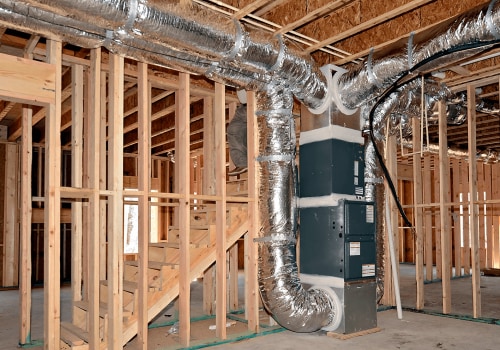
Media Filter Cabinet: A dedicated housing bolted to the air handler that holds a four-inch or five-inch filter, as distinct from a one-inch slot behind a return grille.
MERV: Minimum Efficiency Reporting Value, the residential filter scale defined by ANSI/ASHRAE Standard 52.2 that reports how much of each particle size range a filter removes.
Nominal Size: The rounded whole-inch label printed on a filter frame, used to identify the slot the filter fits rather than to state the filter measured dimensions.
Pressure Drop: The loss of air pressure across a filter, which rises as the media loads with dust and forces the blower to work against more resistance.
Static Pressure: The resistance the whole duct and filter system presents to the blower, measured in inches of water column and used by technicians to judge whether a system is over-restricted.
Learn more about HVAC Care from one of our HVAC solutions branches…
Filterbuy HVAC Solutions - West Palm Beach FL
1655 Palm Beach Lakes Blvd., Ste 1005 West Palm Beach, FL 33401
(561) 448-3760
https://maps.app.goo.gl/VarpgNZnxuPQuW8A7