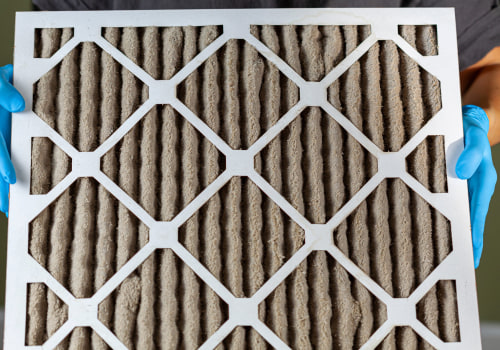
Pull a filter that has been riding backward for a month and the whole story is right there on its face. The pleats sag, the dust cakes on the side that should have stayed clean, and the air has been fighting uphill the entire time. Yes, direction matters on a 12x14x1, and it matters more than almost any other two-minute job in your home.
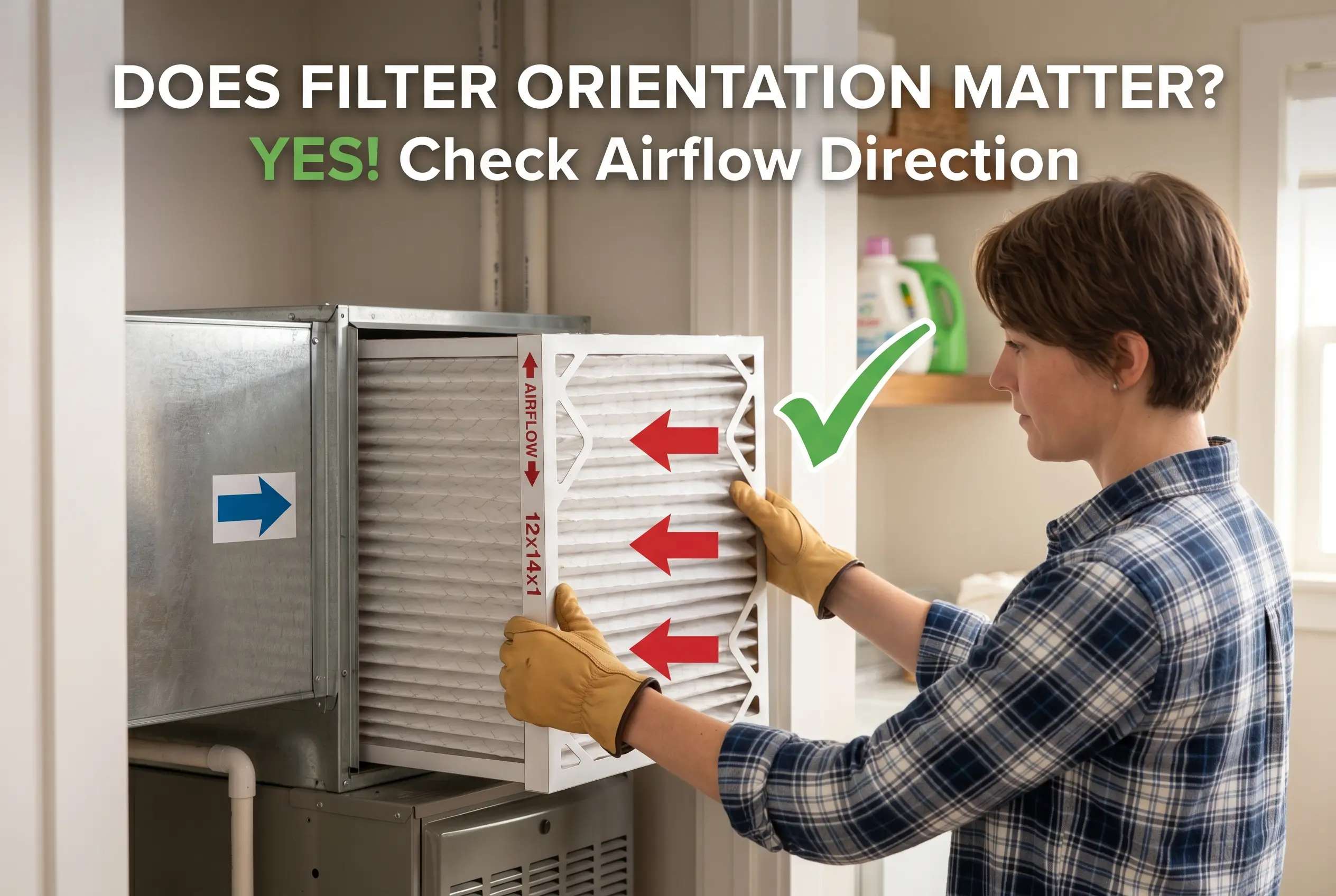
Every pleated air filter carries a small arrow printed on its cardboard frame, and that arrow shows you the way your air is built to move through it. Point it right and the filter does its work with the least resistance. Point it backward and you force the air to shove through against the grain. Give it a few weeks and you feel the result as weaker airflow, a blower that runs hotter and harder, and a filter that clogs and sags long before its time.
I have found more backward filters than I can count sitting inside otherwise healthy systems, and the fix is almost embarrassingly cheap. Two minutes to install a correctly oriented 12x14x1 air filter protects the air your family breathes, the equipment that moves it, and the money a struggling system quietly drains.
TL;DR Quick Answers
- Yes. Orientation matters on a 12x14x1.
- The arrow points the way the air moves, toward the blower or furnace.
- Install it backward and the system still runs, but resistance climbs and the filter wears out faster.
- A filter facing the right way helps reduce dust in your home and keeps airflow steady.
- MERV 8, 11, and 13 all face the same direction, and each one supports fresher air in every room.
- Check it monthly. Replace it at least every three months.
Top Takeaways
- The printed arrow is the whole game. It has to point the same way your air travels, toward the blower or furnace.
- A backward filter will not shut the system down, which is exactly why the mistake hides so well.
- Set it the wrong way and static pressure climbs while the blower strains, but a snug, correct fit helps trap more household dust.
- Nominal size and actual size are not the same, so confirming the real measurement is your first step toward cleaner air you can feel.
- A higher MERV changes how much the filter captures, not the way it faces, and the right pick helps capture fine airborne particles.
How Airflow Direction Actually Works on a 12x14x1
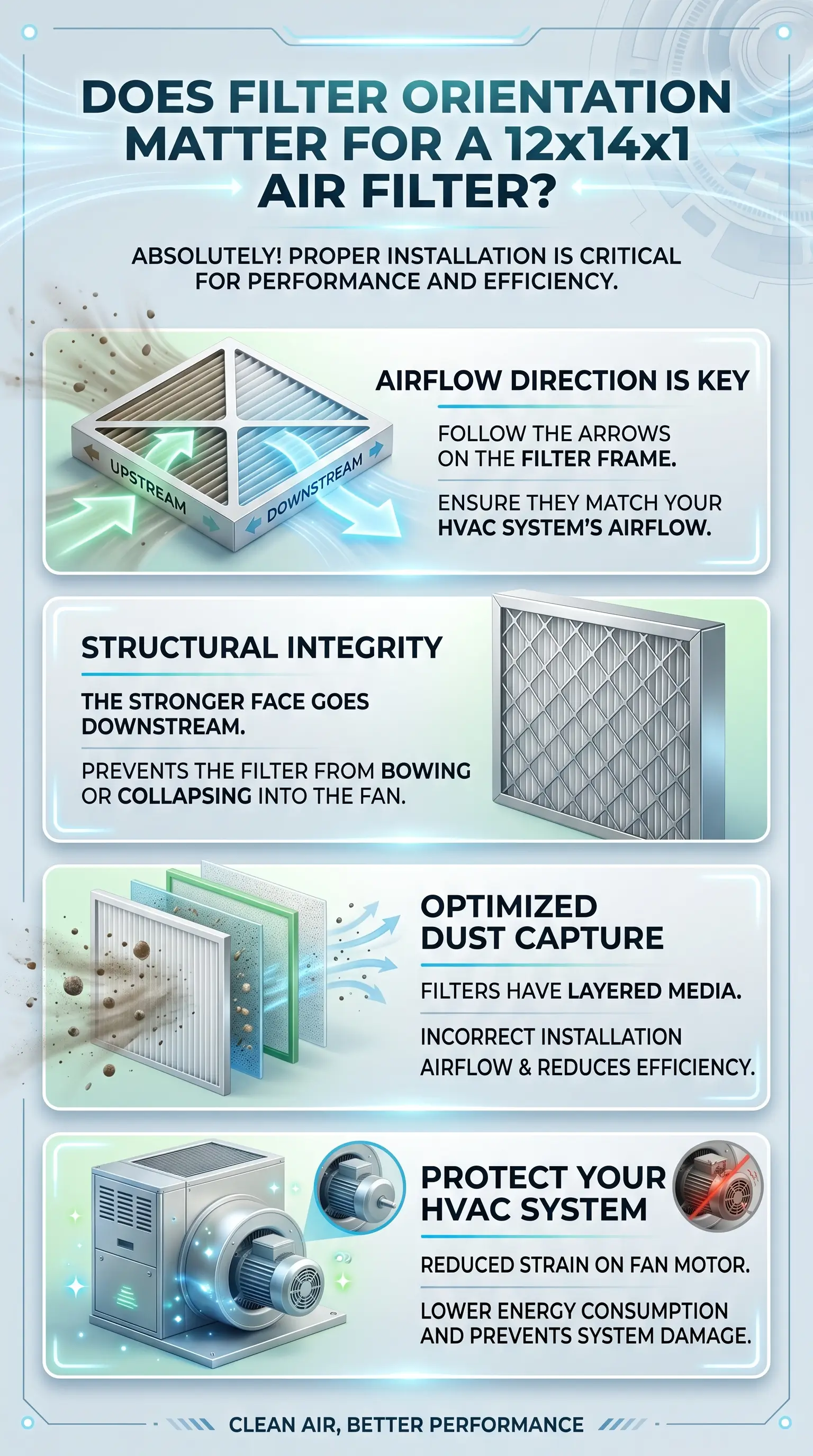
Picture a pleated filter as a one-way street for air. The open, accordion face meets the dirty incoming air and gives dust a wide landing zone across all those folds. The flatter, mesh-backed side faces the clean air, where a wire or cardboard grid braces the pleats against the steady push of the blower. That printed arrow simply marks the clean-side direction for you. Line the arrow up with the airflow and the bracing does its job. Reverse it and the air bows the pleats outward, shrinking the surface that catches particles and driving up the pressure your system has to fight, the same wasted effort you get from leaky ductwork, which is why many homeowners also seal their ducts to cut down on lost airflow.
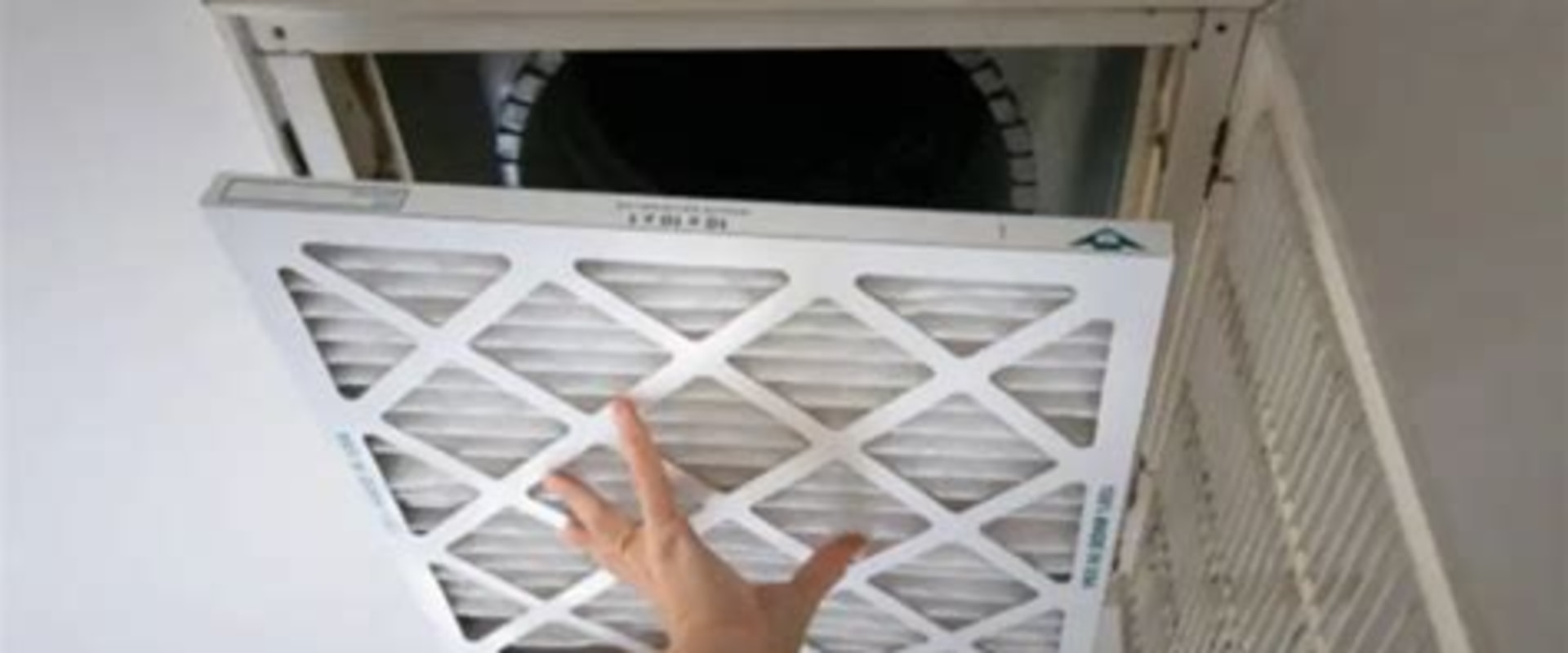
Where the filter lives decides which way the arrow faces. Behind a return grille on a wall or ceiling, the arrow points into the duct and away from the room. Down in a slot at the base of the furnace or air handler, it points toward the equipment. Either way, the rule never changes. The arrow follows the air on its way back to the blower. If the ducts along that path are torn or leaking, no filter can make up the difference, and you may need duct work to restore proper airflow first.
One thing trips people up before orientation ever enters the picture, and that is size. A 12x14x1 is a nominal label, not a tape-measure reading. The filter in your hands runs close to 12.00 by 14.00 by 0.75 inches, because the trade rounds that three-quarter-inch depth up to a clean one inch. Knowing the real number lets you confirm the right slot filter, the kind that seats snugly and helps protect your HVAC equipment from dust sneaking around the edges.
Filtration strength is a separate decision from direction. In our own product testing, a MERV 8 captures roughly 90 percent of the common household particles we measure, a MERV 11 around 95 percent, and a MERV 13 close to 98 percent. A higher rating grabs finer dust and allergens, and it adds a little airflow resistance too, so I point people toward the highest rating their system can still pull air through in comfort, the sweet spot for reliable cooling performance. None of that touches the install, though. MERV 8, 11, and 13 all go in the same way, arrow toward the airflow.
“The backward filter is the first thing I look for when a system feels weak, because I have pulled too many that looked spotless from the front while quietly choking the blower. Match the arrow to the airflow and you protect both the air in the house and the equipment moving it.”
Seven Trustworthy Places to Dig Deeper
When someone wants more than a quick answer, these are the sources I hand them. Every one comes from a public-health, research, or standards group rather than a seller, so the guidance stays honest.
- EPA, Air Cleaners and Air Filters in the Home gives plain-English guidance on selecting and using furnace and HVAC filters.
- CDC (NIOSH), Improving Air Cleanliness explains how filtration fits into healthy indoor air and why filter efficiency matters.
- American Lung Association, Air Cleaning describes where filters sit in a system and why return-duct placement is the norm.
- University of Michigan, Enhanced Indoor Air Filters is a research-backed primer on higher-efficiency filters and fine particulate matter.
- NIST, Indoor Air Quality and Ventilation Group is the federal lab studying how HVAC airflow and filtration shape the air indoors.
- National Library of Medicine, Air Filters and Air Cleaners offers a peer-reviewed look at residential filter types and recommended change intervals.
- Environmental Working Group, Air Filters Home Guide is consumer guidance that stresses installing the filter correctly and seating it securely.
Three Numbers Worth Keeping in Mind
- The EPA reports that people spend about 90 percent of their time indoors, which is where most of our contact with airborne particles happens. The filter you install carries more weight than most people give it credit for.
- According to ENERGY STAR, close to half of a home’s energy use goes to heating and cooling, and a dirty filter drags that system down by slowing the air it depends on.
- The U.S. Department of Energy explains that clogged filters cut airflow and efficiency, and once the air is blocked, dirt slips past and settles on the evaporator coil, where it does the real damage.
Where I Land on Filter Direction
After years of pulling and swapping filters, I will say plainly that orientation earns more respect than it gets. Most people wave it off as a technician’s fussy detail, when it is really a thirty-second habit that decides whether the filter you paid for actually delivers. I would take a modest MERV 8 installed the right way over a premium filter shoved in backward any day, because the backward one quietly undoes everything you set out to do when you wanted to enjoy cleaner indoor air.
My advice is simple. Find the arrow, point it toward the blower, and check the fit before you push the panel home. Build that one habit, pair it with a system that was set up right, and you have laid the groundwork for dependable home comfort all year.
Frequently Asked Questions
Which way does the arrow on a 12x14x1 filter point?
It points the way the air flows, toward the blower or furnace. At a return grille, the arrow aims into the duct and away from the room. At the air handler, it aims toward the equipment.
What happens if I install a 12x14x1 air filter backward?
The system keeps running, so day one looks fine. Over time, resistance climbs, the blower works harder, and the filter clogs and bows out of shape ahead of schedule. The cure is as easy as turning the panel around.
Is a 12x14x1 filter really only 0.75 inches thick?
Yes. The nominal 12x14x1 label rounds up, while the actual filter measures about 12.00 by 14.00 by 0.75 inches, which is standard for one-inch filters. If a thicker option ever tempts you, it helps to know how filter depth affects airflow before you switch.
Does a higher MERV rating change the direction?
No. A MERV 8, 11, or 13 all install with the arrow pointing toward the airflow. A higher rating adds filtration and a touch of resistance, never a different orientation.
My filter has no arrow. How do I orient it?
Face the softer, open pleated side toward the dirty incoming air and the firmer, mesh-backed side toward the blower, since that backing braces the pleats against outgoing air. When you are unsure, check the frame for printed guidance, or lean on the pros behind a well-installed system.
How often should I replace a 12x14x1?
Check it monthly and replace it at least every three months. Pets, allergies, or heavy dust usually move that timeline up, which is a big part of why fresh filters matter.
Check That Arrow Before You Power Everything Back On
Filter orientation is the easiest detail to get right on a 12x14x1, and it pays you back in steadier airflow, lower strain on your equipment, and cleaner air at home. Find the arrow, aim it toward the blower, and slide in a filter sized and seated the way your system expects, the simple move behind keeping cool air flowing all season.
Learn more about HVAC Care from one of our HVAC solutions branches…
Filterbuy HVAC Solutions - Miami FL - Air Conditioning Service
1300 S Miami Ave Apt 4806 Miami FL 33130
(305) 306-5027
https://maps.app.goo.gl/Ci1vrL596LhvXKU79